Disclaimer: We are not attorneys. Nothing in this post is legal advice. If you need to talk to a real estate attorney, please reach out and we will be happy to make an introduction.
What Just Happened With Philadelphia’s Safe Healthy Homes Act — And Why Rental Property Owners Should Still Be Paying Attention
If you own rental properties in Philadelphia and you’ve been searching for what these new Philadelphia landlord-tenant bills actually mean, this one matters. The bills passed. The legislation is on its way to the Mayor’s desk. But the story is not over, and the way it played out is something every property owner in this city should understand.
The lawyers explain this stuff in lawyer language. I’m going to break it down plain, in my own way, because I have direct knowledge of the details surrounding the case.
Part One: How Philadelphia City Council Passed the Safe Healthy Homes Bills — And Why the Process Is Being Challenged
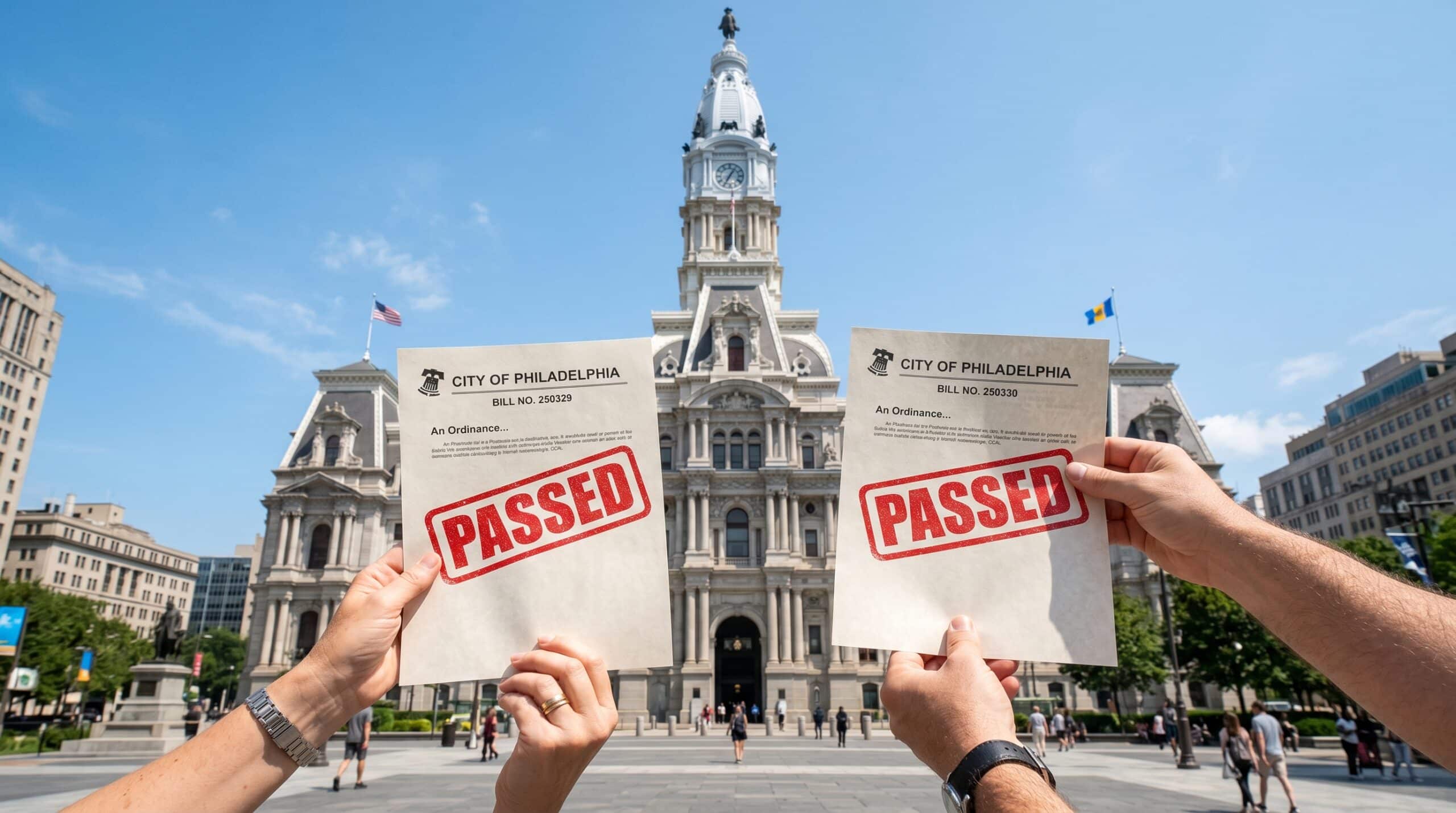
Bills 250329 and 250330 are Councilmember Nicolas O’Rourke’s “Safe Healthy Homes” package: the Right to Repairs Ordinance and the Right to Safety Ordinance. Big bills. Real consequences for every rental property owner in this city.
On March 4, City Council’s Housing Committee held a hearing on these bills. Here’s the part that matters: the committee voted the bills out of committee BEFORE the public got to comment on them. Stop and think about that. Public comment came after the vote. The order of operations on something this consequential. Flipped.
Two Philadelphia landlords, Seth Floyd and Erica Hadley, filed suit. The claim: City Council violated Pennsylvania’s Sunshine Act. That’s the law that says the government can’t make decisions behind closed doors. Deliberations ARE SUPPOSED to happen in public, with a quorum, out in the open. The lawsuit also alleged Council violated the city’s Home Rule Charter by deliberating and reaching consensus on the bills behind closed doors before the hearing even started.
The City didn’t fight the complaint. They folded. Agreed in court to pull the bills from the scheduled vote, send them back to committee, and hold a new hearing. The right way.
Stop and think about THAT for a second. If the complaint was nonsense, and one of the elected officials called it a “petty attempt to delay,” why did the City give the plaintiffs everything they asked for? They wouldn’t.
So a new hearing was held on March 30. The committee voted the bills out a second time. Final Council vote was scheduled for April 16, then pushed.
But here’s what the plaintiffs say happened during that new hearing: Councilmembers got up, walked across the hall, and started hashing out amendments in private — while the public hearing was still running. Long stretches with no quorum in the room.
That is exactly what the Sunshine Act exists to stop. The public hearing becomes theater. The real deal goes down behind closed doors. That is not how this is supposed to work.
The plaintiffs filed for contempt. The judge didn’t halt the legislative process, but didn’t give the City a clean bill of health either. The case is still alive. U.S. District Judge Wendy Beetlestone is expected to decide whether the housing committee violated the Sunshine Act, and the contempt question is still in front of the court.
Now here’s what really got me upset. Councilmember O’Rourke went after HAPCO Philadelphia for pursuing this. HAPCO asked for copies of the amended bills, something Council has provided as a matter of course for years. Denied. (HAPCO has other resources to obtain the amendments, but that shouldn’t be how the organization operates considering whom HAPCO serves.) That looks a whole lot like retaliation to me.
And here’s the kicker: the legislation O’Rourke is pushing INCLUDES anti-retaliation language. You don’t get to write rules about retaliation while retaliating against the people questioning your process.
This was never personal. It’s about following the rules. The same rules everyone else has to follow.
Part Two: What Philadelphia’s Safe Healthy Homes Act Actually Changes for Landlords
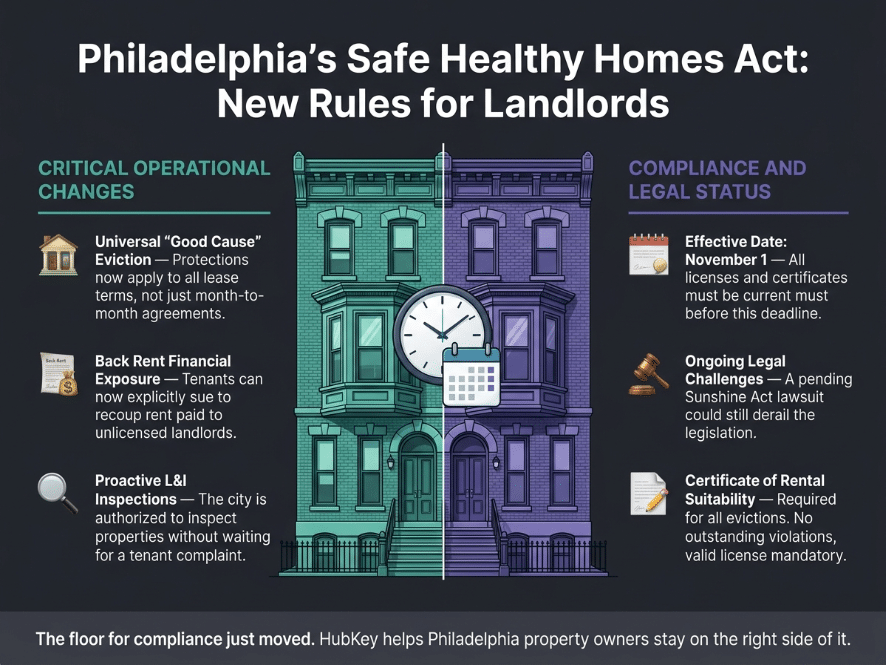
On April 23, City Council passed the Safe Healthy Homes Act 16-1. The bills now head to Mayor Parker for signature. Effective date: November 1.
So what actually changed for Philadelphia rental property owners?
Good Cause Eviction Now Applies to All Leases
Good cause eviction protections expand to ALL renters. Today, the law only applies to month-to-month leases or leases under a year. Under the new bills, regardless of the term of a tenant’s lease, a landlord must state in writing the legitimate, legally defined reason they want to terminate or not renew. The previous exemption for longer leases is gone.
Back Rent Liability If You’re Unlicensed
Tenants can sue for back rent if you collected without an active Philadelphia rental license and a Certificate of Rental Suitability. The current law isn’t definitive on whether a tenant can recoup rent already paid. The new bills make it explicit. If you collected rent without proper licensing, you have exposure.
Philadelphia’s New Proactive Rental Inspection Program
A proactive rental inspection program is authorized. L&I gets the authority to inspect, not just respond to complaints.
Before eviction, you must provide an updated Certificate of Rental Suitability, which requires a valid rental license and no outstanding violations. Licenses, violations, appeals, and suspensions must be posted on the property.
Stronger anti-retaliation protections for tenants who participate in tenant unions or in investigations of code violations.
There IS a “safe harbor” provision meant to protect landlords when delays are the city’s fault. That one’s worth understanding in detail.
The Sunshine Act Case Is Still Live
Now here’s the part that is NOT over.
The Sunshine Act case is still in front of Judge Beetlestone. The contempt motion is still pending. The plaintiffs also amended their complaint to include constitutional claims: that the bills rewrite existing contracts between landlords and tenants in a way that violates property owners’ rights. Either track could still derail the legislation.
Some legal observers think landlords face an uphill battle on both fronts. The fact that the City went ahead and voted suggests they believe they will prevail. But “uphill” isn’t “impossible,” and the contempt question is a serious one. If the City is held in contempt, throwing the legislation out entirely is on the table.
So we’re in a strange place: the bills passed, the effective date is November 1, but the court could still change the landscape between now and then.
What This Means If You Own Rental Property in Philadelphia
Whether the litigation succeeds or not, here is the truth: the floor for compliance just moved.
If you have an active Philadelphia rental license, your Certificate of Rental Suitability is current, you maintain the property, and you handle lease non-renewals properly, none of this should change your life. The bills are not going to make a compliant landlord miserable.
If you’ve been operating loose: expired licenses, no Certificate of Rental Suitability, undocumented non-renewals, deferred maintenance. November 1 is going to be a rough date. And the proactive inspection authority means you don’t get to wait for a tenant to complain.
This is exactly why HubKey exists. We work with Philadelphia property owners every day on the compliance pieces that just got more important: license tracking, Certificates of Rental Suitability, lease structure, proper documentation around non-renewals, and the operational systems that keep all of it on the rails. Not theory. The actual day-to-day.
If you want to understand what the Safe Healthy Homes Act means for your portfolio specifically, or just talk through whether your current setup is going to hold up against the new rules, reach out to HubKey. We help Philadelphia property owners stay on top of rental licensing, compliance requirements, and everything in between. We’ll walk through it with you. Contact us and we’ll be in touch.
We’re not going anywhere. And we’re going to make sure the owners we work with aren’t either.

Mike Goldstein is the CEO and Broker of Record at HubKey Real Estate. He bought his first Philadelphia rental property in 2008 and has been managing and acquiring properties across the city ever since. He founded HubKey in 2022 to bring transparency to Philadelphia property management. His focus is helping everyday people build wealth through real estate.