This article is general information for Philadelphia property owners, not legal or financial advice. Rules around notice, rent increases, and lease terms change, and your own lease may say something different. Check your lease and the City of Philadelphia’s landlord resources before you act, and talk to an attorney if you are unsure.
Table of Contents
If you own a rental in Philadelphia, there is a good chance a lease renewal is sitting on your desk right now. September and October are when most of these decisions land. The summer leasing rush is over, the students have moved in, and you are looking at a tenant whose lease ends in December or January, wondering whether to raise the rent, keep it where it is, or start fresh with someone new.
Most landlords treat this as a gut call. It shouldn’t be. A lease renewal is one of the most expensive decisions you make on a property all year, and the math is not close once you run it properly.
Here is how to think about it this fall.
Why this lease renewal season looks different
Two numbers matter this year, and they point the same direction.
The first is rent. As of September 2026, the average rent in Philadelphia sits at about $1,600 a month, and it has not moved in a year. It is actually down slightly from August. A two-bedroom averages around $1,660, a one-bedroom around $1,350 (Zillow Rental Manager). Philadelphia is still roughly 20% cheaper than the national average, which is a real part of the city’s appeal for renters, but flat is flat.
The second is vacancy. The rental vacancy rate across the Northeast climbed to 5.9% in the second quarter of 2026, up from 5.2% a year earlier (U.S. Census Bureau data via FRED). More units sitting empty means more competition for every renter who is looking.
Put those together and you get the picture for this lease renewal season. Rents are not climbing, and vacant units are competing harder. That means a tenant who leaves is harder to replace than they were a year ago, and the replacement is not going to pay much more than the one you have.
That shifts the math. Not forever, but for right now.
What a turnover actually costs in Philadelphia
Most self-managing landlords underestimate this badly, because they only count the obvious line items. The vacancy is the expensive part, and it is the part people forget.
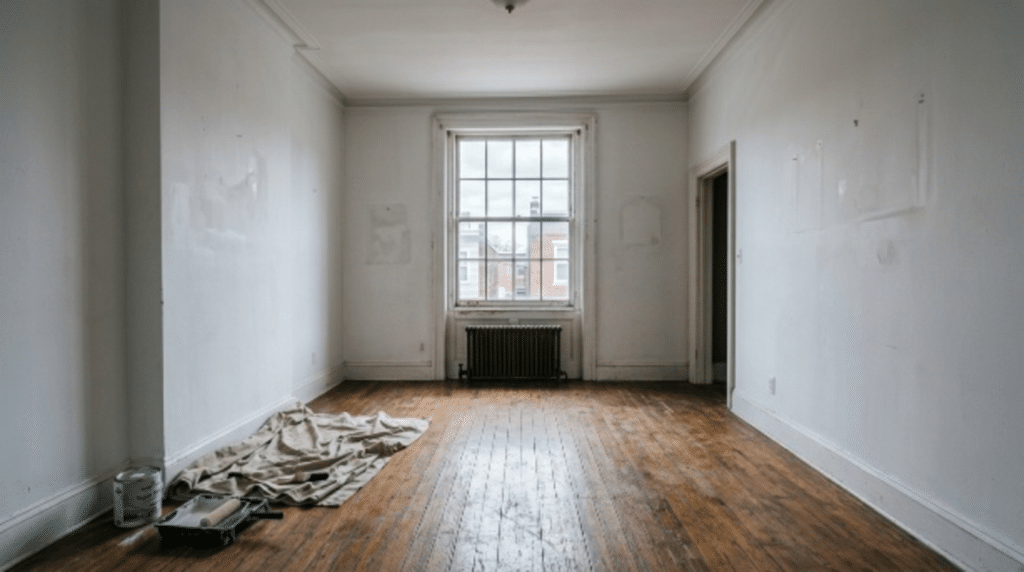
Here is what turning over a Philadelphia unit typically runs. These are the ranges we see on standard one and two-bedroom rowhome units in our service area. Your numbers will vary with condition and finish level.
| Line item | Typical cost |
| Vacancy (3 to 6 weeks at $1,660/mo) | $1,150 – $2,300 |
| Professional cleaning | $250 – $400 |
| Paint and touch-up | $400 – $900 |
| Minor repairs and punch list | $200 – $600 |
| Photography and listing | $0 – $300 |
| Lock re-key | $75 – $150 |
| Total | $2,075 – $4,650 |
That is before you count your own time showing the unit, screening applicants, and running the move-in.
And the vacancy line is worse in the fall. A unit that would lease in ten days in June can sit for six weeks in November, because most of Philadelphia’s moving activity is concentrated between May and August. List in late fall and you are fishing in a much smaller pond.
The renew-or-replace math on a real unit
Take a two-bedroom at the Philadelphia average of $1,660. Your tenant has been fine. Pays on time, no complaints, keeps the place reasonable. Their lease ends December 31.
Option A: renew at a 3% increase.
New rent is $1,710. Over twelve months that collects $20,520, and it costs you essentially nothing to get. No vacancy, no paint, no showings.
Option B: turn over and re-list at $1,760.
You think a new tenant will pay 6% more. Twelve months at $1,760 is $21,120 on paper, but you have to subtract the $2,075 to $4,650 it costs to get there. That leaves you somewhere between $19,045 and $16,470.
Renewing puts $1,475 to $4,050 more in your pocket in year one. And that is the optimistic version of Option B, because it assumes you actually achieve the higher rent in a market that has been flat for twelve months.
It does not turn around in year two either. From then on the new tenant pays $50 a month more than the renewed one, which is $600 a year. At that rate it takes somewhere between two and a half and nearly seven years just to recover what the turnover cost you. And that assumes the new tenant is as good as the old one, which is the part nobody can promise you.
This is the thing that surprises people. Chasing a higher number usually costs more than the number is worth.
When raising the rent is the right call
None of the above means you should freeze rent forever. Holding a unit 20% below market for six years because you like the tenant is not loyalty, it is a slow, expensive mistake, and it makes the eventual correction painful for everyone.
A rent increase makes clear sense when:
- The unit is genuinely under market. Not by $50. By 10% or more. At that gap you are leaving real money on the table, and you should not need a turnover to fix it. A tenant paying well under market has every reason to accept a correction and stay, which gets you the higher rent without paying for a vacancy.
- You have put real money in. New HVAC, a renovated kitchen, a replaced roof. The unit is worth more than it was, and a modest increase at lease renewal is how that investment comes back.
- Your costs moved. Taxes, insurance, and water do not care what you charged last year.
- You have never raised it. Small annual adjustments are easier to absorb than one large one after five flat years.
The word doing the work there is modest. A 3% to 5% increase on a good tenant at lease renewal is a very different conversation than 12%.
When holding rent flat is the smarter move

Keeping rent where it is can be the better financial decision, not just the comfortable one. Consider it when:
- The tenant is genuinely good. Pays on the first, reports a leak before it becomes a ceiling, does not call you about lightbulbs. That is worth more than $50 a month, and you will not know what you had until you replace them.
- Your lease ends in the dead months. A December or January end date puts you in the worst leasing window of the year in Philadelphia. If you do turn over, consider offering a shorter or longer term at lease renewal so the next end date lands in early summer, when the pool of renters is deepest.
- You are already at market. If your rent matches what comparable units in your neighborhood are actually leasing for, not what they are listed at, there is nothing to capture.
- The unit needs work you have not done. Asking more for a kitchen from 1998 gets you a longer vacancy, not a higher rent.
That last point about timing is worth sitting with. If you own a unit whose lease always ends in December, you have been quietly paying a seasonal penalty every single year. Fixing that at one lease renewal, even at the cost of a flat year, pays you back for as long as you own the building.
How to handle the lease renewal conversation
The mechanics matter as much as the number.
- Start early. Reach out well before the lease ends so nobody is making a decision under pressure. Your lease will specify what notice is required, so check it first.
- Put it in writing. A short, plain note with the proposed term and rent. No lectures, no justification essays.
- Explain the number if you are raising it. “Taxes and insurance went up, so rent is going to $1,710” lands far better than a bare figure. People accept increases they understand.
- Know your floor before you send it. Decide in advance what you will accept if they counter. Negotiating without a number in mind is how landlords end up agreeing to things at 9pm on a Tuesday.
- Consider a concession instead of a lower rent. If the tenant is stretched, a one-time credit or a small improvement to the unit keeps your headline rent intact for next year’s lease renewal. Dropping the rent resets your baseline permanently. A concession does not.
Getting your number right before you decide
Every part of this comes back to one question: what is the unit actually worth right now?
Not what you charged last year. Not what the listing down the street is asking. What comparable units in your neighborhood have actually leased for in the last few months. Philadelphia is not one rental market, and rents in Fishtown, Point Breeze, and Graduate Hospital move independently of each other. A number that is right in one is wrong in the next.
That is the piece most self-managing landlords are missing at lease renewal, and it is the reason so many are simultaneously underpriced and convinced they are at market.
FAQ
When should I start the lease renewal process?
Most owners start too late. Reaching out 60 to 90 days before the lease ends gives both sides room to think, and gives you time to prepare the unit if the tenant decides to leave. Check your lease for the notice it requires.
How much can I raise rent at lease renewal?
The market sets the ceiling, and your lease and city rules set the process. With Philadelphia rents flat year over year in 2026, most owners are landing in the 0% to 5% range on renewals rather than the larger jumps common a few years ago.
Is it better to renew or find a new tenant?
In a flat market with rising vacancy, renewing a reliable tenant usually wins. A turnover on an average Philadelphia two-bedroom runs roughly $2,000 to $4,700 once you count the vacancy. At a realistic increase, that takes several years of the higher rent just to recover.
What if my tenant asks for a rent reduction?
Look at what the unit would actually lease for today before you answer. If they are at or above market and you would struggle to replace them in November, a one-time concession often costs you less than either a permanent rent cut or a vacancy.
Should I offer a month-to-month lease instead?
It buys you flexibility, and it costs you predictability. It also tends to put your next vacancy in an unpredictable month. If the goal is to move your lease end date into Philadelphia’s strong spring and summer leasing window, a fixed term of a few extra months usually serves you better.
How do I know what my unit should rent for?
Look at what has actually leased nearby in the last three to six months, not what is currently listed. Asking prices tell you what owners hope for. Lease prices tell you what renters paid.
Know your number before your next lease renewal
A free Rental Income Analysis from HubKey tells you what your unit should actually be renting for in your specific Philadelphia neighborhood, based on what comparable properties have leased for recently. It takes a few minutes, and you will walk into your next lease renewal knowing your number instead of estimating it.
And if the honest answer is that you would rather not be the person running these calculations every fall, that is what we do. HubKey manages Philadelphia rentals end to end, from pricing and lease renewal through maintenance and compliance, so owning the property stops feeling like a second job.

Mike Goldstein is the CEO and Broker of Record at HubKey Real Estate. He bought his first Philadelphia rental property in 2008 and has been managing and acquiring properties across the city ever since. He founded HubKey in 2022 to bring transparency to Philadelphia property management. His focus is helping everyday people build wealth through real estate.